Insight
Your Guide to an Omnichannel Patient Engagement Strategy
This Article Covers
- Defining Omnichannel Patient Access
- The Evolution of Patient Access
- How an Omnichannel Strategy Helps Advance Patient Access
- Modernizing the Patient Call Center for Omnichannel Access
- Challenges Facing Healthcare Organizations
- Best Practices for Implementing Omnichannel Patient Engagement
- See How We Help
- Enhance Patient Experiences
Healthcare’s digital transformation has provided patients and providers with a wide array of tools to manage care, from mobile apps to patient portals. However, many of these tools operate in silos, resulting in a disjointed and often frustrating experience for patients as they navigate through disconnected systems.
According to the Health Information National Trends Survey, about two-thirds of individuals accessed their patient information online at least once a year and roughly one-third of individuals were frequent patient portal users. However, significant barriers remain for users and non-users alike. Fragmented experiences, limited interoperability between systems, and a lack of personalized options can keep patients away and engagement low.
To fix these problems, over three-quarters of health systems have increased their investment in patient engagement, according to a recent survey of CHIME members. Adopting an omnichannel patient engagement strategy helps providers create an integrated patient experience that improves efficiency, increases satisfaction, and drives value.
This guide provides healthcare IT executives and leaders with strategies to improve patient engagement and drive value through an omnichannel approach to access.

Defining Omnichannel Patient Access
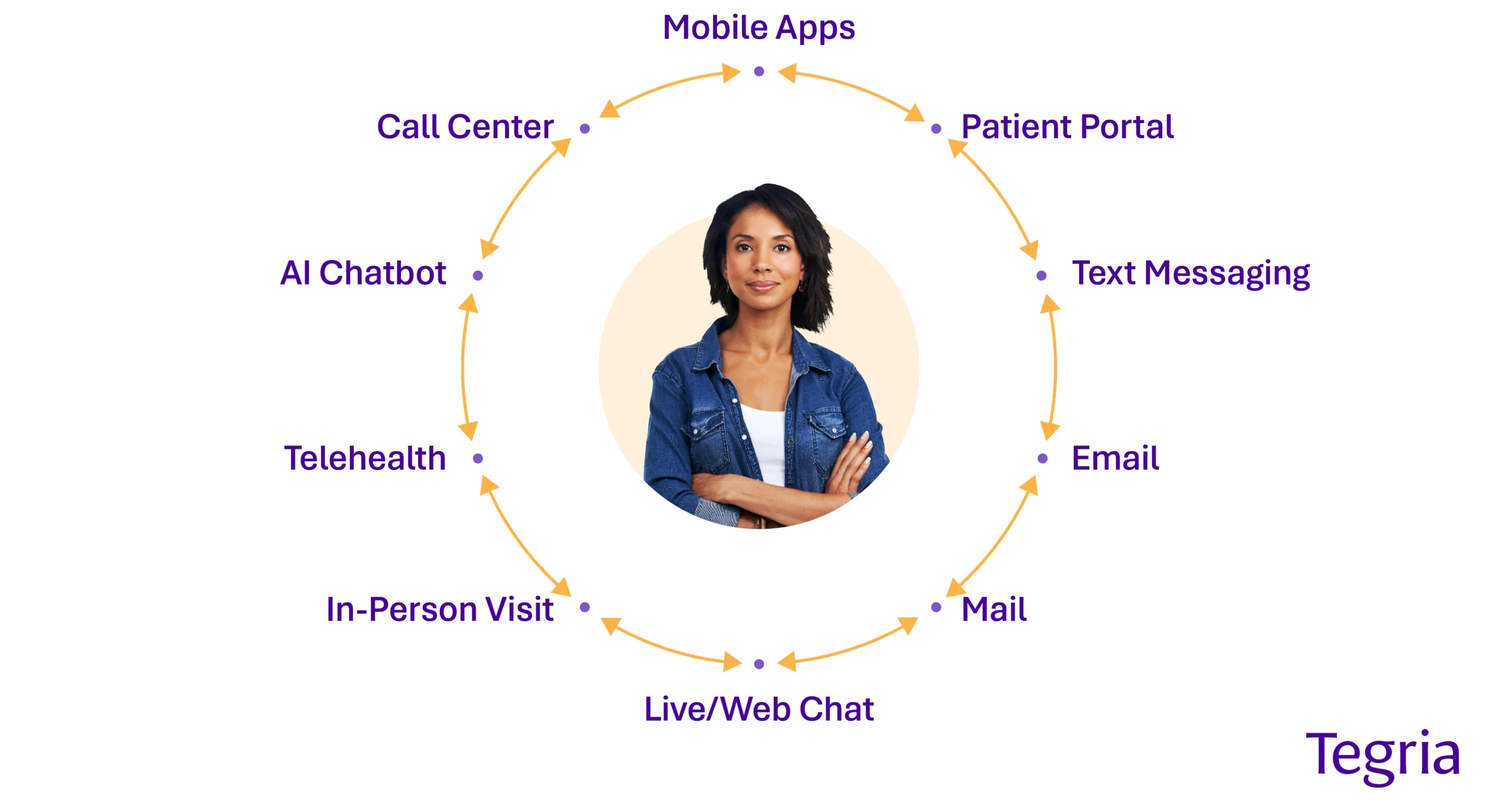
In the healthcare sector, omnichannel patient access is a seamless, integrated approach that allows patients to interact with healthcare services through multiple channels—such as phone, web, mobile apps, and in-person visits—while maintaining a consistent experience across all platforms.
Omnichannel Patient Access Model
Interconnected access channels allow patients to transition seamlessly between touch points during their care journey.
The Evolution of Patient Access
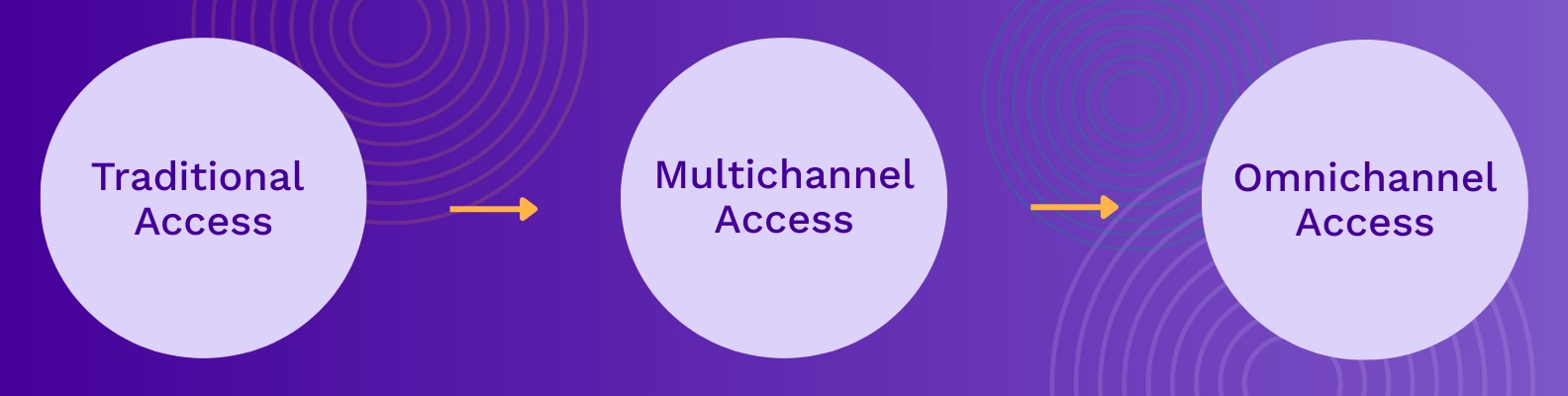
The healthcare industry has undergone a significant transformation since the inception of patient-centric care. We’ve witnessed a steady shift from traditional, fee-for-service care models to more value-based care centered around the patient and their outcomes. This mindset has expanded in recent years with advances in digital health tools that empower patients with greater access to and control over their care.
Traditional Patient Access Models
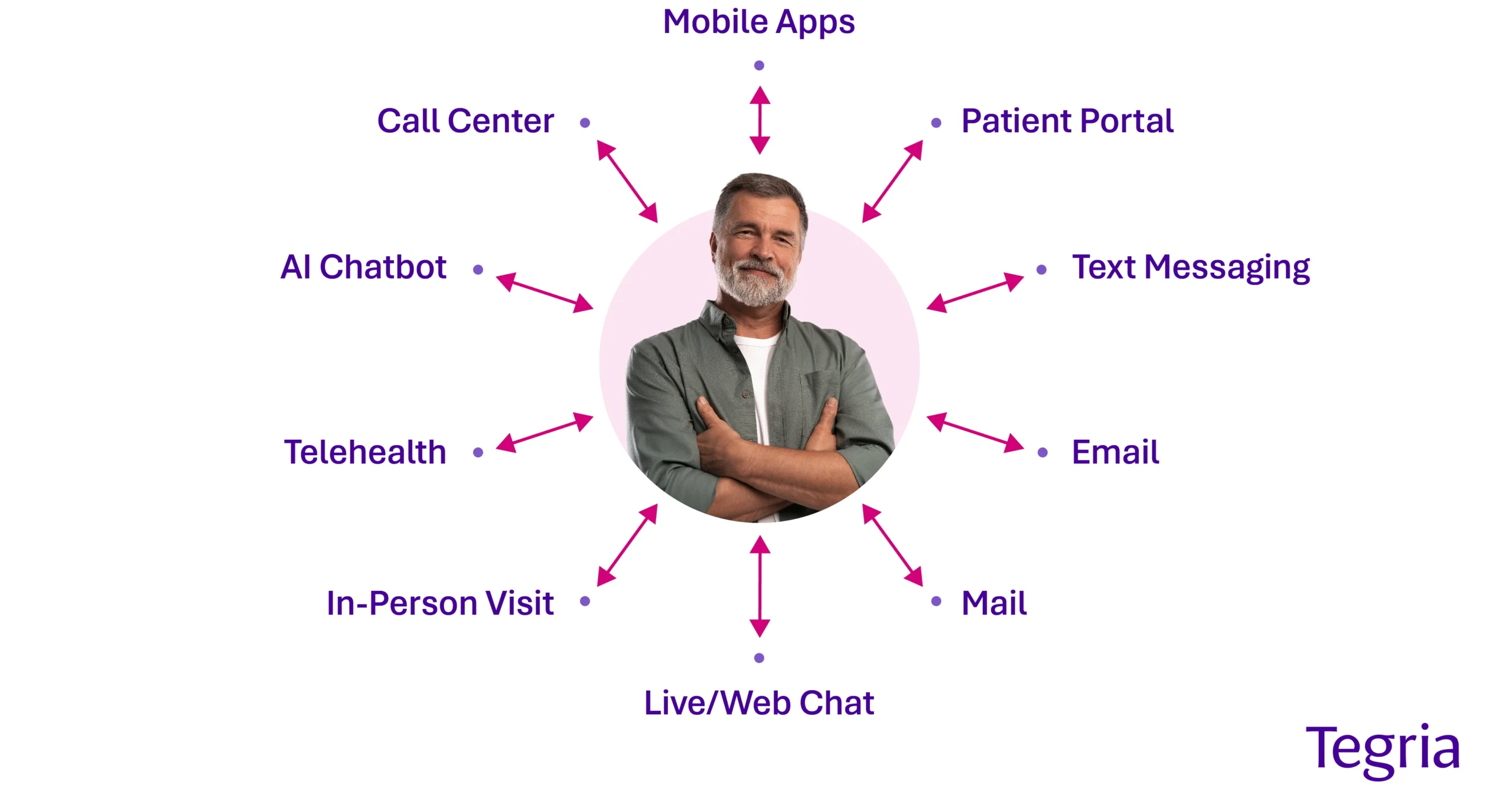
Originally, patient access relied heavily on physical presence, paper records, and manual processes. A patient’s access to care, and even their own information, was centered around the provider’s hours and processes. This pre-digital era created a siloed effect that often delayed care and claims processing due to the difficulty of transferring patient records.
Traditional Patient Access Model
Siloed access channels with limited functionality require more effort from patients, leading to frustrating experiences as patients navigate between touch points.
The Shift to Digital and Multichannel Engagement
According to 2025 research by HIMSS, more than 50% of the general population uses digital tools most of or all of the time to communicate and engage with their providers. That just goes to show that today’s patients seek efficient and secure access to their health information and modernized patient communication strategies that provide the ability to schedule appointments, communicate with providers, and view and pay financial responsibilities online.
Multichannel strategies have shaped an organization’s digital front door by introducing online patient portals, mobile apps, wearable devices, and other digital tools. Despite inherent benefits, multichannel digital tools are disconnected and operate independently of one another. This can lead to a fragmented experience where patients may need to reenter data, search for lab results, or even start over at each new touch point in their care journey.
Emergence of Omnichannel Strategies
Omnichannel patient engagement, sometimes called healthcare 3.0, takes the digital era to the next level with a customer-led approach that puts the patient at the center of their healthcare experience. Unlike multichannel access, an omnichannel access strategy integrates all touch points to provide a seamless and unified patient experience. Patients can navigate between the different channels without needing to repeat information. At the same time, providers can push pertinent reminders and information to the patient without using multiple texting solutions.
For example, a patient can book an appointment through a mobile app, receive a text message reminder, and then check in via the online portal. After the appointment, the patient may receive care instructions and reminders or choose to communicate with the provider via online chat or a virtual visit. At each patient touch point, all channels are synchronized with up-to-date health records and preferences to ensure an optimal experience that promotes engagement.
An omnichannel strategy benefits providers too, by reducing repetitive data entry, expanding access to real-time data, and promoting collaboration with patients and other providers. This frees up valuable time and helps providers feel supported to practice at the top of their license.
Benefits of an Omnichannel Approach to Patient Access

How an Omnichannel Strategy Helps Advance Patient Access
Healthcare organizations today must adopt innovative approaches to navigate a constantly shifting landscape. An omnichannel access strategy addresses these challenges by optimizing engagement and operational efficiency across the following key areas:
- Evolving Care Models: As care models shift toward value-based care and virtual health, omnichannel access integrates multiple digital platforms—such as telehealth, mobile apps, and patient portals. This flexibility enhances continuity of care and patient adherence, making it easier for patients to navigate through increasingly complex care models.
- Scaling Access Operations: Inpatient discharges in hospital settings are estimated to increase by 5 percent over the next 10 years. An omnichannel patient access strategy is inherently future-focused and scalable, helping organizations transition their access operating model as healthcare evolves. By providing multiple channels and leveraging automation tools such as chatbots and artificial intelligence, healthcare organizations can handle a higher volume of patient interactions without straining human resources.
- Improving Patient Experiences: An omnichannel approach to patient engagement allows HCOs to address common access-related complaints, from confusing scheduling experiences to long appointment wait times. By connecting each touch point in a patient’s journey and eliminating the barriers that create frustrating experiences, omnichannel access strategies create seamless, satisfying patient experiences.
- Streamlining Financial Clearance: Financial clearance plays a crucial role in patient access by ensuring patients understand costs before receiving care. Omnichannel systems automate administrative tasks like insurance verification, out-of-pocket calculations, and prior authorizations. Streamlining these processes across digital platforms reduces clinical delays and the likelihood of denied claims.
- Achieving Digital Health ROI: By implementing an integrated omnichannel approach, providers can drive efficiencies that reduce costs, such as minimizing in-person visits through telehealth and automating routine administrative tasks. This enhances the patient experience and contributes to better financial outcomes and a stronger return on investment (ROI) for digital health initiatives.
Modernizing the Patient Call Center for Omnichannel Access
Often the first touch point in a patient’s care journey, call centers are the cornerstone of effective patient communication strategies. If well-organized, these call centers can handle large volumes of patient requests, enabling patients to book appointments, schedule referrals, and ask general questions.
Modern contact centers leverage AI and automation to streamline appointment scheduling, manage prescription refills, and answer frequently asked questions.
AI's Impact on Access
79% of executives report that AI and automation have already had a moderate or significant impact on their organization’s strategy, and 96% of CFOs plan to increase their investment in AI.
When complex or sensitive issues arise, call centers can seamlessly transition from digital interactions like chatbots to human agents, ensuring that patients receive the appropriate care and attention. Organizations can opt for a virtual call center to balance workload and workforce across multiple locations—this can be particularly helpful for organizations employing remote workers.
Ultimately, the contact center is the heart of an omnichannel patient engagement strategy. By integrating phone calls with web chat, email, and mobile apps, organizations ensure a consistent, personalized experience—guaranteeing patients receive the same high level of care regardless of how they choose to connect.
Challenges Facing Healthcare Organizations
Patient access in healthcare has become more complex as organizations grapple with evolving expectations and technological demands. An omnichannel patient access strategy can help healthcare providers address these challenges:
Addressing Common Challenges With an Omnichannel Approach
| Problem | Solution |
|---|---|
| Fragmented Patient Data | Omnichannel patient access unifies patient data across platforms, ensuring a seamless flow of information between EHRs, portals, and communication tools, enhancing care continuity and improving billing and claims accuracy. |
| Balancing Patient and Provider Experiences | By reducing redundancies, streamlining workflow, and employing automation and AI, an omnichannel strategy reduces the administrative burden on providers while enhancing patient satisfaction through personalized, real-time engagement. |
| Budget Constraints and ROI | An omnichannel strategy unifies an organization’s digital access footprint to eliminate redundant, unneeded tools, optimize existing tools, and automate routine processes to maximize efficiency, reduce costs, and improve patient retention and revenue. |
| Mergers and Acquisitions | Omnichannel platforms help standardize patient engagement across newly combined systems. Adopting an omnichannel approach to access during M&A can ensure that patient experiences remain consistent. |
Best Practices for Implementing Omnichannel Patient Engagement
Identify Operation Challenges and Gaps
Patient journey mapping is a powerful method for identifying key touch points and pain points. Understanding how patients interact with healthcare services throughout their care journey, from researching care options to scheduling appointments, checking in, and beyond, is essential. Mapping these various channels and identifying frustrations is integral to achieving an access operating model that improves access to care for more satisfied and engaged patients.
Establish Ongoing Governance
Organizations should consider long-term governance early in the implementation process. Shifting to an omnichannel patient access model is a significant cultural change requiring ongoing employee engagement and leadership buy-in across the organization. Prioritizing governance early in the implementation process and ensuring that governance remains in place as the initiative matures are critical to the long-term success.
Ensure Seamless Integration Across Channels
Integration is the core of an omnichannel patient engagement strategy because it ensures that healthcare organizations provide a seamless, consistent, and efficient patient experience. Connected systems allow patients to easily access the care they need, from booking appointments to receiving follow-up care, all through a unified platform. Failing to integrate key access touch points can cause delays, confusion, and misinformation, which can negatively affect an organization’s brand and patient loyalty.
Leverage Data for Continuous Improvement
Data analytics provides insights into patient behaviors and identifies inefficiencies that can shape new strategies for enhanced patient access. By analyzing data generated through various patient interactions, healthcare organizations can better understand patient needs, preferences, and pain points.
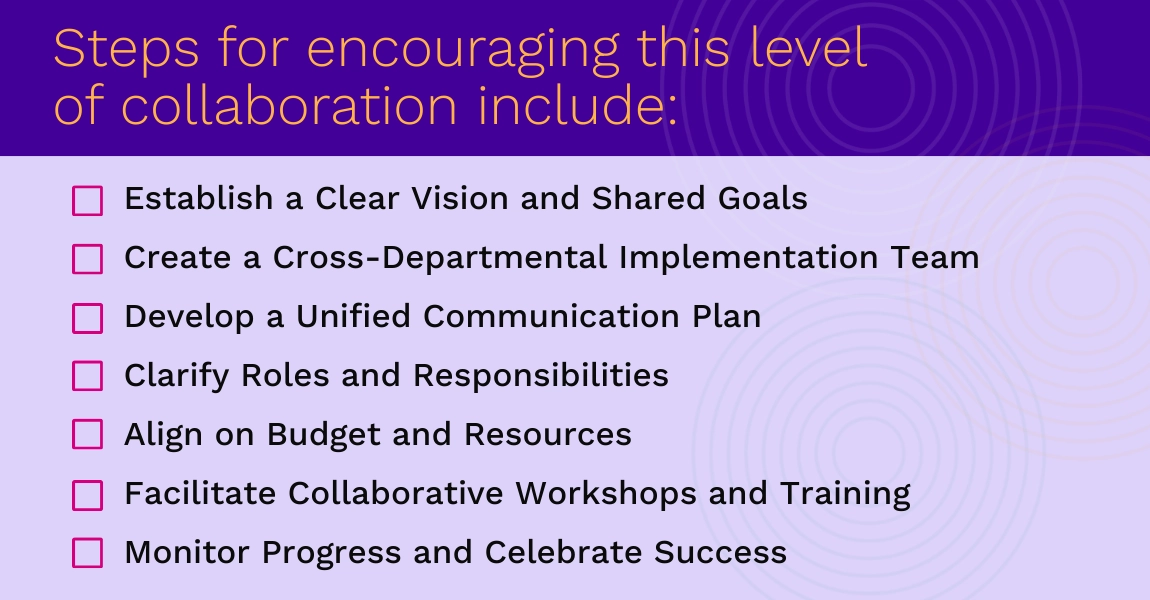
Encourage Collaboration Across Departments
A successful omnichannel patient engagement hinges on a unified change management strategy that encourages collaboration among leadership from different departments, including IT, clinical services, operations, and finance. Cross-departmental collaboration helps support organizational goals and fosters informed decisions that align clinical priorities with operational needs.
The healthcare industry’s shift to an omnichannel access model is driven by technology advancements, changing patient expectations, and an ongoing need for more personalized, convenient, and efficient care. People are at the heart of this transformational change, meaning technology alone can’t adequately address their needs. An omnichannel approach to patient engagement creates new efficiencies to meet growing patient demand while alleviating provider burden. It aligns technology with administrative operations, clinical care, and the needs and preferences of diverse patient populations.
As we move forward, developments like AI and ML, chatbots, and virtual assistants are shaping the future of omnichannel patient engagement. These technologies hold enormous potential to transform healthcare as we seek to control costs and drive revenue without compromising care.
Are you ready to take patient engagement strategy to the next level?