Resource
Grit, Innovation, and the Road Ahead: Rural Health Transformation Funding Insights for 2027
Tegria is honored to partner with the healthcare organizations keeping vital care close to home for their patients and communities. Through conversations with our clients and time spent at conferences across the country, we keep hearing the same message: rural organizations are being asked to do more with less, and anticipated changes to federal programs will only make things harder.
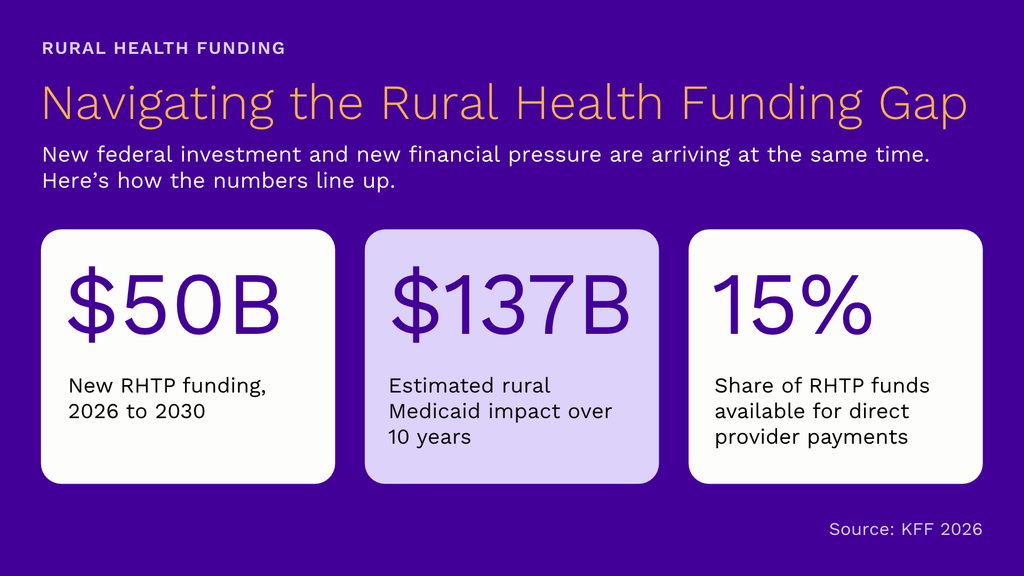
Rural health organizations are entering 2027 with a mix of new federal funding and new federal pressure. The Rural Health Transformation Program (RHTP) is delivering $50 billion over five years, but it arrives alongside Medicaid work requirements, 340B payment changes, and the expiration of enhanced ACA subsidies, changes that together will shape rural hospital finances for years to come. Here’s what we’re watching, and where we see the smartest investments.
The numbers behind the pressure
Rural hospitals were operating on thin margins well before the latest policy changes. The National Rural Health Association (NRHA) reports that nearly half of rural hospitals nationally operate with negative margins and are vulnerable to closure. The American Hospital Association’s (AHA) October 2026 report points the same way, finding that over 40% of the roughly 1,800 rural hospitals in the U.S. have negative operating margins.
Medicaid is a major factor. According to KKF, 48% of rural hospitals serving a high share of Medicaid patients had negative margins, which leaves them less able to absorb new revenue losses. The 2025 reconciliation law is now expected to reduce federal Medicaid spending in rural areas by an estimated $137 billion over ten years. The first disruption arrives soon: work requirements for adults. While some states may elect to use the optional six-month implementation delay, others could begin rolling out these requirements as early as January 1, 2027.
The RHTP is a significant investment, but KFF notes that the $50 billion fund is smaller than the $137 billion in estimated rural Medicaid cuts. Timing matters too: nearly two thirds of the ten-year federal Medicaid reductions occur after fiscal year 2030, after the program’s annual awards end.
What we’re watching
As we look ahead, we see several trends shaping rural health:
Transformation dollars with strings attached. States are directing funds toward regional collaboration, technology modernization, data sharing, and workforce development. But provider payments are capped at 15% of a state’s award in a given budget period, so much of this money won’t reach daily operating needs. Organizations that understand their state’s plan and position themselves to participate will benefit most.
Coverage churn becomes a revenue issue. New eligibility and reporting requirements, including work requirements and more frequent redeterminations, mean patients can lose coverage over administrative hurdles, even when they remain eligible. The expiration of the enhanced ACA premium tax credits adds to the problem; the Commonwealth Fund estimates rural hospitals could lose an additional $1.6 billion in patient revenue. When patients lose coverage, hospitals don’t stop treating them; uncompensated care rises and they absorb the cost. Patient access, registration, and revenue cycle will matter more than ever.
340B changes could add to the revenue pressure. Rural hospitals make up 41% of 340B hospitals, and with more than four in ten operating at a negative margin, those savings are essential to many. Two federal changes are set for January 1, 2027. The Centers for Medicare & Medicaid Services (CMS) finalized a Medicare payment cut for 340B drugs, reducing reimbursement from average sales price plus 6% to average sales price minus 28%. The Health Resources and Services Administration’s (HRSA) revised rebate pilot would also require hospitals to purchase certain drugs at the wholesale price and wait for rebates, which hospital groups say will disrupt cash flow. NRHA warns that eroding these savings could mean cuts to services like chemotherapy, dental care, and obstetrics. The pilot is being challenged in court, so the outlook remains fluid.
Policy remains a moving target. Bipartisan proposals aimed at easing the pressure are gaining attention, and while the new Congress convening in January 2027 may place rural health stability high on its agenda, any legislative relief remains uncertain. As a result, our clients are planning for multiple scenarios and building flexibility into their strategies. We encourage organizations to operate based on current law while actively engaging local elected officials and state and national healthcare associations to advocate for the unique needs of their communities.
The Rural Health Transformation Program is real money, but it’s not a replacement for what rural organizations are losing on the Medicaid side. The organizations that come out ahead will be the ones that treat this funding as a chance to build lasting capacity, not just bridge a gap. That means being deliberate about where the dollars go and how they connect to the rest of the organization’s strategy.
MELISSA ERIKSONDirector, Public Sector Market
The unsung leaders
Behind every statistic is a leader doing several jobs at once. We see executives working to balance a budget in the morning, connecting patients with food and other basic needs by noon, and troubleshooting a broken generator by evening.
We also see innovators. Rural organizations are finding regional partners to expand services, hunting down grants and funding to support their missions, and cross-training staff to fill gaps while building real career paths. The word grit has never been more fitting.
Where we believe investment should go
In this environment, every investment needs to earn its place. At Tegria, our view is that the right investments give rural organizations one of two things: more time or more revenue. Time back for staff stretched across too many roles. Revenue that is captured, protected, and sustained. When leaders have both, they can focus on what they do best: serving as a beacon for their communities.
We’re here to help navigate the challenges ahead.