Insight
From Strategy to Execution: Key Insights From HIMSS26
Each year, the HIMSS Global Health Conference & Exhibition brings together healthcare leaders, innovators, and policymakers to explore the technologies and strategies shaping the future of healthcare. HIMSS26, held March 9–12 in Las Vegas, convened thousands of industry stakeholders to discuss the evolving role of AI, digital transformation, and operational strategy in a rapidly changing healthcare landscape.
Across the conference, one theme surfaced repeatedly: Successful transformation depends on strong alignment between strategy, operations, and technology. Whether the conversation focused on patient access, revenue cycle performance, or large-scale technology adoption, healthcare leaders emphasized the importance of connecting strategy, operations, and technology to deliver measurable outcomes.
Tegria contributed to these conversations through three sessions exploring how healthcare organizations can bridge the gap between strategic priorities and operational execution. From improving patient access to strengthening change management and preventing revenue cycle denials, the discussions highlighted practical strategies health systems are using to navigate today’s challenges while preparing for the future.
Closing the Access Execution Gap
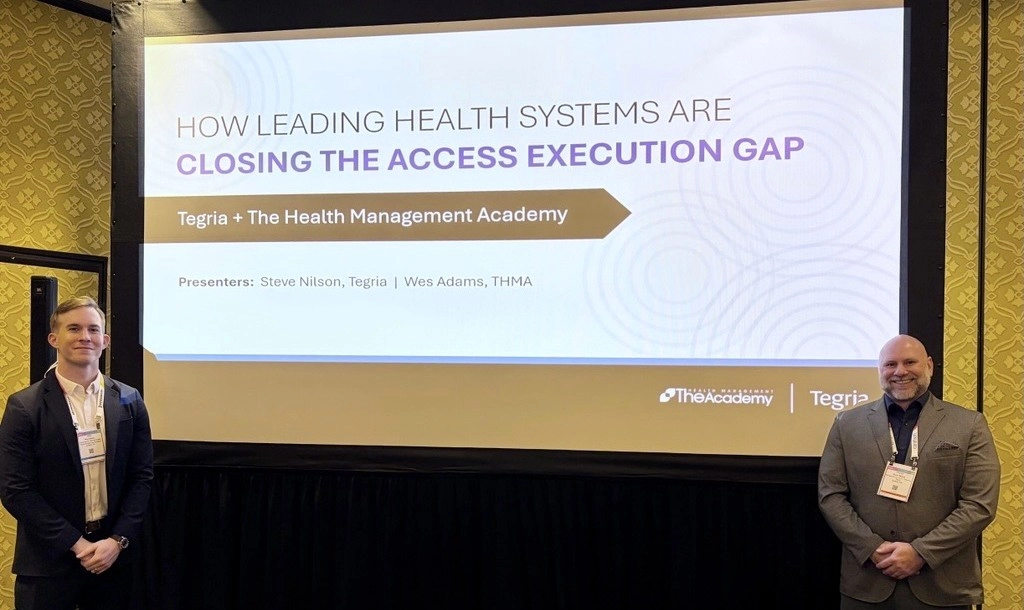
Tegria’s HIMSS26 programming began on Tuesday with “How Leading Health Systems Are Closing the Access Execution Gap,” presented by Steve Nilson, Acting Director of Access & Experience at Tegria, and Wes Adams, Senior Director at The Health Management Academy (THMA). The session shared original research conducted jointly by Tegria and THMA examining how health systems are defining and operationalizing patient access strategy.
Drawing on surveys and executive interviews with health system leaders conducted in late 2025, Nilson and Adams explained that patient access has rapidly evolved from an operational metric into a strategic priority. The research found that 82% of health systems now identify access as a strategic pillar, placing it alongside growth, quality, and financial performance as a key driver of enterprise success. Yet many organizations struggle to translate strategy into results. Nilson and Adams described persistent gaps in governance, ROI measurement, and operational execution, emphasizing that closing these gaps requires stronger alignment between leadership, operations, and technology teams.
82% of health systems say patient access is now a strategic pillar—but many still struggle to operationalize it.
Don’t Gamble on ROI: Win Big With Change Management
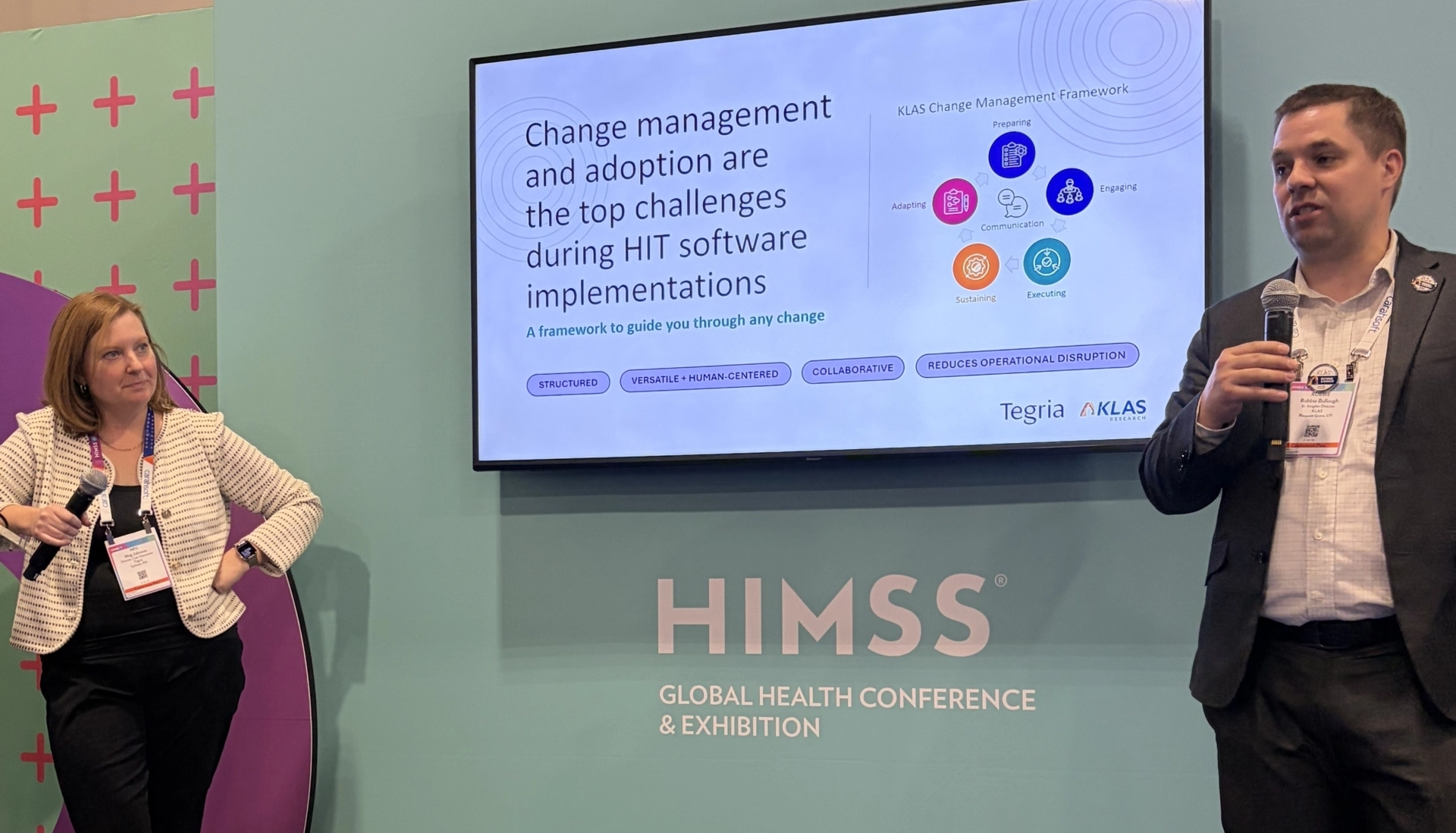
On Wednesday, Meg Johnson, Director of Care Operations at Tegria, joined Robbie Bullough, Senior Director of Consulting at KLAS Research, to present “Don’t Gamble on ROI: Win Big With Change Management.” The session explored one of the most persistent barriers to healthcare transformation: the difficulty organizations face in achieving adoption and measurable results from new technology investments.
Johnson and Bullough explained that, while health systems often focus on selecting the right technology, the real determinant of success is how effectively organizations manage the human and operational aspects of change. Drawing on insights from KLAS Research, the speakers shared how organizations that prioritize structured change management are significantly more likely to realize the value of their technology investments. They also introduced the KLAS Change Management Framework, which helps organizations engage stakeholders early, align operational teams, and establish clear adoption metrics that extend beyond go-live.
Organizations that prioritize change management are seven times more likely to achieve successful outcomes from technology initiatives.
Denied No More: A Revenue Recovery Playbook
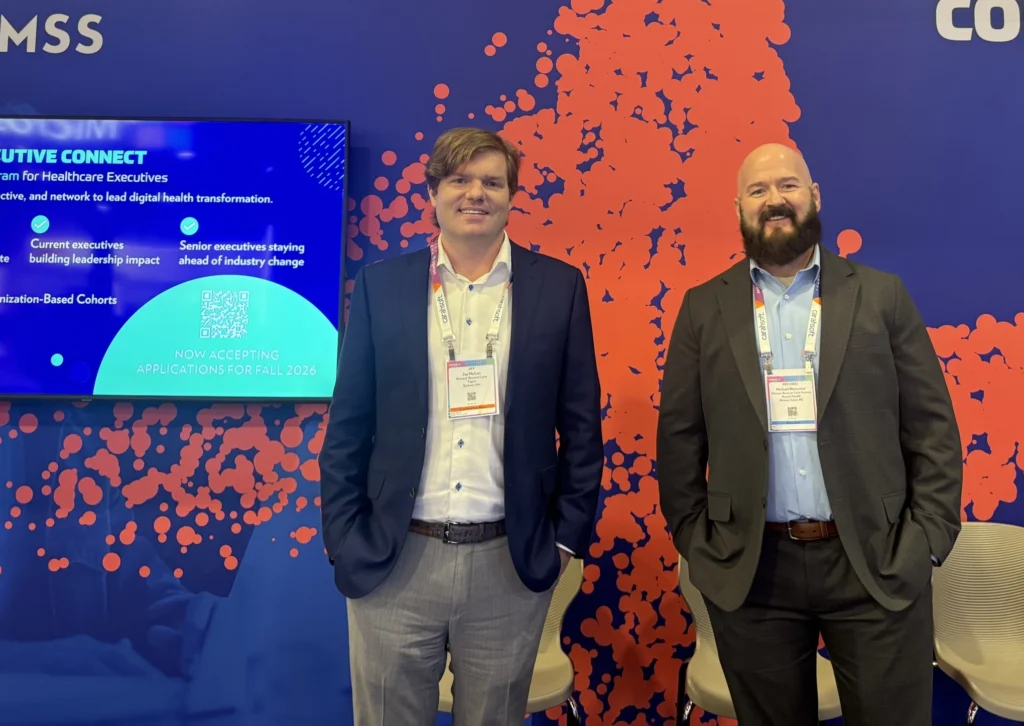
Later that day, Jay Nelson, Principal at Tegria, joined Michael Newsome, Director at Novant Health, to present “Denied No More: A Revenue Recovery Playbook.” The session focused on strategies health systems can use to identify and prevent bundled denials, an often overlooked but significant contributor to revenue loss.
Nelson and Newsome discussed how many bundled denials stem from evolving payer policies, coding conflicts, and inconsistencies in billing rules that can be difficult to detect without deeper revenue cycle analytics. By analyzing denial patterns and implementing stronger front-end edits, organizations can prevent many of these issues before claims are submitted. The presenters also highlighted the role of cross-functional collaboration between clinical, coding, and revenue cycle teams, along with emerging AI-driven tools that help organizations anticipate policy changes and identify denial risks earlier. Through these strategies, Novant Health has achieved a 99.88% clean claim rate through its clearinghouse, demonstrating how proactive analytics and operational coordination can significantly reduce preventable denials.
Novant Health achieved a 99.88% clean claim rate through proactive denial prevention strategies.
Looking Ahead
The conversations at HIMSS26 reinforced a reality healthcare leaders know well: Technology transformation is as much about organizational alignment as it is about innovation. As health systems navigate growing financial pressures, workforce challenges, and rapidly evolving technologies, success will increasingly depend on their ability to connect strategy, operations, and data-driven decision-making.
For Tegria, HIMSS continues to be an important forum for sharing insights and learning from healthcare leaders across the industry. The discussions in Las Vegas underscored the importance of practical, operationally grounded strategies for all aspects of care, from improving patient access and strengthening revenue cycle performance to ensuring that technology investments deliver meaningful results.
We look forward to continuing these conversations with healthcare organizations working to turn strategy into sustainable transformation.