Insight
Beyond Go-Live: 6 Continuous Optimization Strategies for Epic
Implementation Isn’t the Finish Line
Going live with Epic marks a major milestone that often follows years of planning, preparation, and investment. For most organizations, however, the real work begins after the initial launch. Without a plan for continuous optimization, momentum can fade, Epic’s capabilities may be underused, and opportunities for gains in efficiency, revenue, and patient care can be lost.
Tegria has supported some of the most complex Epic implementations in the country, embedding teams that work side by side with clients to sustain progress, adapt to evolving needs, and achieve long-term return on investment. From refining clinical workflows to expanding data and analytics capabilities, our experience shows that the most successful organizations approach optimization as an ongoing discipline rather than a one-time event.
Why Continuous Optimization Matters
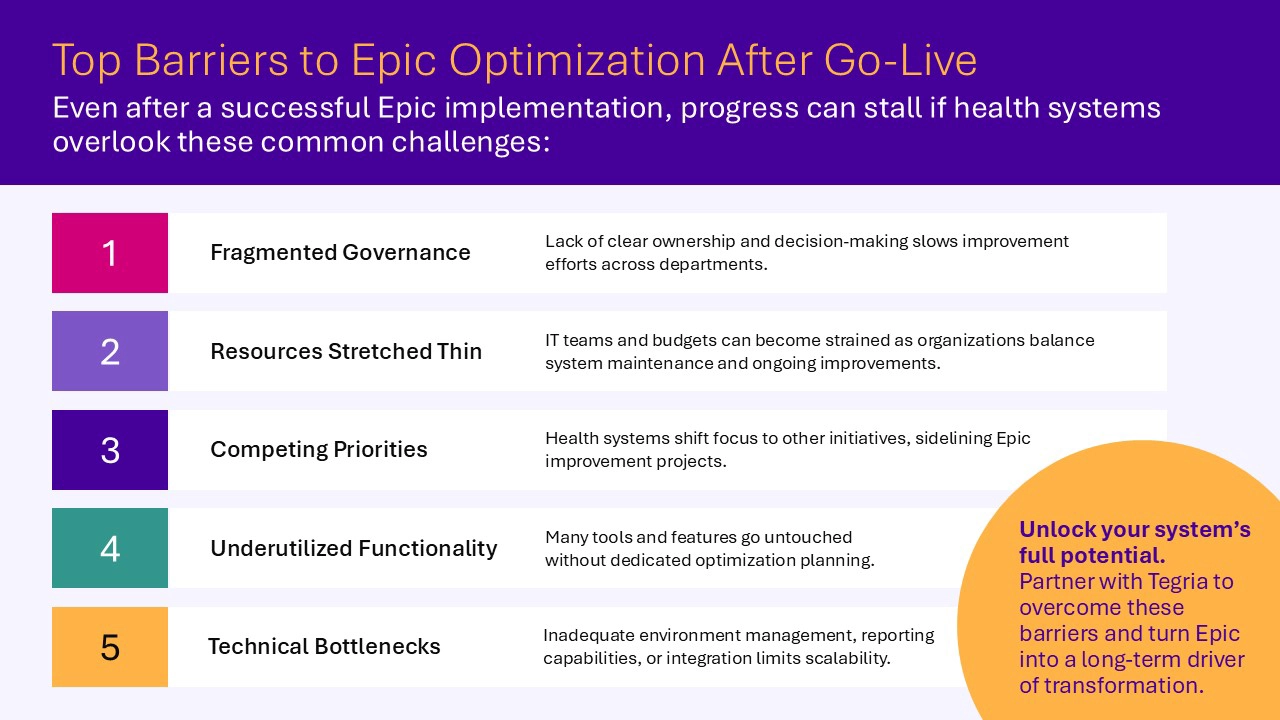
Even the best-planned go-lives reveal gaps in workflows, user adoption, and system performance. In the early post-live period, these challenges can be masked by the focus on system stabilization. Over time, health systems often face familiar issues: workflow misalignment, inconsistent user adoption, reporting gaps, and technical bottlenecks.
Beyond stabilization, the healthcare environment continues to evolve. New regulatory requirements, changing payment models, system upgrades, and shifting patient expectations all require ongoing refinement of Epic environments. Governance structures that worked during implementation may need to be redesigned for long-term decision-making and prioritization.
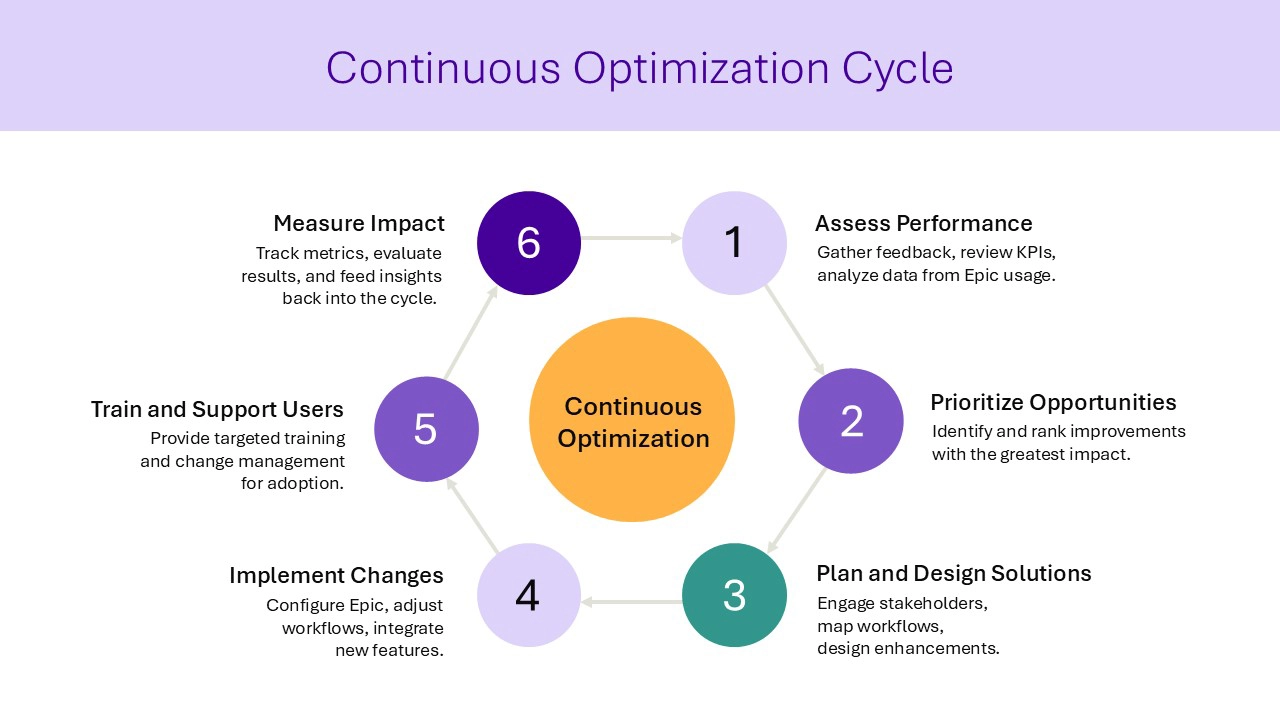
Organizations that maintain performance and realize sustained value share a common trait: They take a proactive, data-driven approach to optimization. Continuous engagement with stakeholders, regular performance monitoring, and targeted improvements all help drive efficiency, clinician satisfaction, and better patient outcomes.
Strategic Areas of Focus for Optimization
The most effective optimization strategies are targeted and measurable, built on performance data from your Epic system. By focusing on the following areas, health systems can achieve sustained improvements and measurable returns.
Clinical and Operational Alignment
Optimization begins with aligning clinical workflows to operational goals. This requires ongoing engagement with clinicians to adapt Epic to their needs, reduce administrative burden, and improve patient care. Physician informatics programs can enhance usability, streamline documentation, and give clinicians more time with patients. Capacity management tools help align clinical supply with patient demand, improving throughput and reducing delays.
Epic EHR Optimization Saves Clinician Time, Increases Efficiency
Tegria cut In Basket messages by nearly 1,000 per day and minimized clicks for providers, staff, and coders.
Revenue Cycle Optimization
Financial performance is directly tied to the accuracy and efficiency of clinical workflows. Post-go-live, organizations often find opportunities to better integrate front-end and back-end processes.
Designing a Single Billing Office, improving the patient financial experience, and strengthening charge capture can deliver measurable revenue gains while supporting patient satisfaction.
Strategic Revenue Integrity Improvements Generate $19.4 Million
Tegria optimized charge capture, automation, reconciliation, and charge description master governance to prevent lost revenue.
Training and Change Management
Technology alone does not ensure success. Staff turnover, role changes, and system updates create a constant need for training. Without it, user adoption declines and optimization results can diminish.
An effective training program includes ongoing education for new hires, credentialing for trainers, and refreshers tied to system upgrades. A well-maintained training environment ensures teams are prepared for new features and workflows.
UW Medicine Transforms Initial EHR Education With Amplifire
UW Medicine slashed training time for nurses by 75% and reduced training time for providers by 50% using an adaptive learning platform.
Data Analytics and Reporting Support
Epic holds a wealth of operational and clinical data; but without the right reporting and analytics approach, its potential remains untapped. Optimization includes building reliable reporting tools, ensuring data accuracy, and delivering timely insights that support decision-making.
Business Intelligence teams can meet ongoing operational and clinical reporting needs while advancing analytics maturity, from descriptive reports to predictive modeling and value-based care initiatives.
Technology and Infrastructure Support
Strong technical foundations are essential for successful optimization. This includes environment management, upgrade planning, and integration with other systems.
Efforts may involve biomedical device integration, third-party system connections such as lab systems or Capsule, and improvements to environment synchronization processes. Proactive management reduces bottlenecks and prepares the system to scale as the organization grows.
EpicCare Ambulatory Specialty Sprints Increase User Satisfaction, Secure Revenue
An academic health system in the Midwest created an EpicCare Ambulatory sprint program to reduce a backlog of application enhancement requests.
Integrated Readiness Planning
Live organizations often expand services, add new locations, or introduce additional Epic modules. Each change requires operational and technical readiness.
Integrated readiness planning supports major events like CFO Summits, Clinic Manager Days, and Patient Flow Days, and creates repeatable processes for onboarding new services, clinics, and staff. Thorough planning minimizes disruption and accelerates adoption.
Creating a High-Performing Epic PMO To Scale Implementations
Tegria helped the University of Colorado Health scale Epic implementations and develop a strong internal Project Management Office.
Tegria’s Optimization Framework
Tegria views continuous optimization as a sustained partnership that adapts to evolving needs. Our framework includes:
- Advisory Services: Strategic guidance on governance, workflow design, and long-term planning.
- Build and Integration: Technical expertise for Epic configuration, environment management, and third-party integrations.
- Support Services: Role-based Tier 2 and Tier 3 support to expand capacity and address issues efficiently.
- Analytics Enablement: Development of operational and clinical reporting capabilities to inform decisions.
- Embedded Teams: Consultants, analysts, informaticists, and trainers who work alongside client teams to ensure adoption.
This flexible model ensures that optimization efforts remain aligned with each organization’s goals and priorities.
Building a Culture of Continuous Improvement
Sustainable optimization depends on a culture that embraces ongoing improvement. This means embedding optimization into governance structures, maintaining visibility into performance metrics, and making decisions based on data.
Regular optimization workgroups keep initiatives on track, while monitoring key performance indicators—such as provider satisfaction, throughput times, and revenue cycle metrics—helps identify new opportunities.
Keeping pace with Epic upgrades is equally important. Falling behind can limit access to new functionality and create technical debt. Leveraging Epic’s AnyTime Notes and following upgrade readiness plans ensure the system continues to evolve with the organization’s needs.
Achieving Epic Gold Star Recognition With Ongoing Support
Montage Health reduced Epic OPA volume by 58% and completed 13 Epic upgrades with Tegria's support.
Conclusion: Realizing the Full Value of Epic
The launch of Epic is a significant milestone, but long-term success comes from what happens afterward. A proactive, structured approach to optimization can enhance workflows, strengthen financial performance, improve satisfaction for both patients and providers, and help organizations adapt to a changing healthcare landscape.
Tegria partners with health systems to design and implement optimization strategies that align with organizational goals, deliver measurable value, and ensure Epic remains a catalyst for transformation. From advisory and technical expertise to embedded support, we help clients build the foundation for sustained success.
Ready to take your Epic environment beyond go-live?
Contact us to start planning your post-live optimization roadmap.
Epic is a trademark of Epic Systems Corporation.