Insight
Driving Sustainable Change in Healthcare: A Conversation With Tegria and KLAS Research
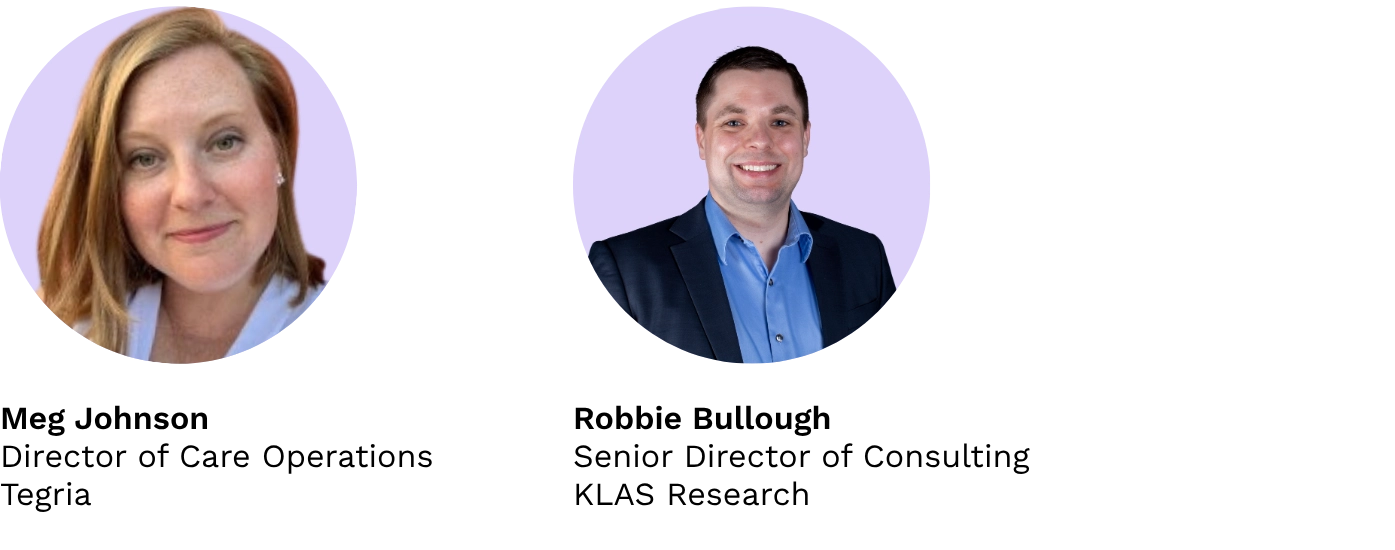
In a recent episode of the “AHA Associates Bringing Value Podcast,” the American Hospital Association sat down with Meg Johnson, director of Care Operations at Tegria, and Robbie Bullough, senior director of consulting at KLAS Research, to discuss why structured change management is a strategic imperative in healthcare transformation. Their conversation explored how healthcare leaders can move beyond implementation checklists to foster true adoption, build trust, and sustain results over time.
Below are key insights from the discussion.
Q: Why is it critical to build change management into transformation strategies from day one?
Meg Johnson:
If you had the chance to make transformation successful, wouldn’t you take it? Research shows that effective change management makes it seven times more likely you’ll achieve your intended outcomes and ROI. Too often, we start with a project plan but forget the change plan—the equivalent groundwork that prepares people to engage and sustain transformation. Without it, organizations risk delays, budget overruns, and even long-term “change fatigue.” You don’t get many chances at large-scale transformation, so it’s vital to start strong.
Robbie Bullough:
When change isn’t planned from the start, costs multiply later—extra training, rework, system redundancies, even staff turnover from burnout. These are invisible costs at first, but very real when they hit. Like maintaining your home appliances, the ROI of doing change management right is that things keep working smoothly.
Q: Who needs to be involved early on to make transformation successful?
Meg Johnson:
Transformation affects everyone differently, so success depends on alignment across all stakeholder groups. Executive sponsors are essential. They must stay visible and engaged throughout the process. But frontline and mid-level leaders also play a critical role. They help uncover resistance early and build support among staff. The most successful organizations bring diverse voices to the table, even from outside their immediate structure, to build broad coalitions of support.
Robbie Bullough:
Operations leaders must have a voice in design and decision-making. When people feel change is done with them instead of to them, adoption rates soar. If operations are left out, resistance builds, and you end up fixing problems that could have been prevented by including them from the beginning.
Q: How can organizations integrate change management into their overall business strategy, not just IT projects?
Robbie Bullough:
It starts with leadership alignment and continues with clear, transparent communication throughout every phase, from preparation through sustainment. Change management isn’t a one-time task; it’s like a liquid that should flow throughout the organization.
Meg Johnson:
One of the most practical steps any organization can take right now is to equip leaders to lead through change. Build the “change muscle” at all levels so leaders understand their roles, the tools available, and the shared language for talking about change. That foundation makes it easier to activate when new initiatives arise—technical or otherwise.
Q: How should organizations measure success beyond technical metrics?
Meg Johnson:
We start by defining what success looks like early: What percentage of adoption is realistic, how quickly to expect results, and what outcomes truly matter. Then we track awareness, engagement, and capability through surveys and feedback loops. These insights let us adapt our approach in real time, whether by strengthening sponsor visibility or refining communication.
Robbie Bullough:
The feedback loop is critical. It’s not enough to collect feedback—you have to act on it and show people how their input led to change. When employees see that their voices drive decisions, they’re more invested in sustaining success.
Q: What advice would you give healthcare leaders to ensure change is sustainable long after go-live?
Meg Johnson:
Shift away from a “project” mindset. Go-live is just one moment in a longer journey. Adoption happens over time, and it’s fueled by honest feedback, transparency, and celebrating progress. When people see how their work connects to better patient outcomes, that’s what keeps change alive.
Robbie Bullough:
Exactly. Sustainability means managing change through and beyond go-live. These principles apply not just to IT but to any organizational change—mergers, restructures, process redesigns, anything that affects people. If you follow a structured, human-centered framework, you’ll create lasting transformation.
Listen to the Full Conversation
To hear the complete interview with Meg Johnson and Robbie Bullough, click here.