Insight
Boost Value-Based Care Performance in 2026
How To Bounce Back From Disappointing Results
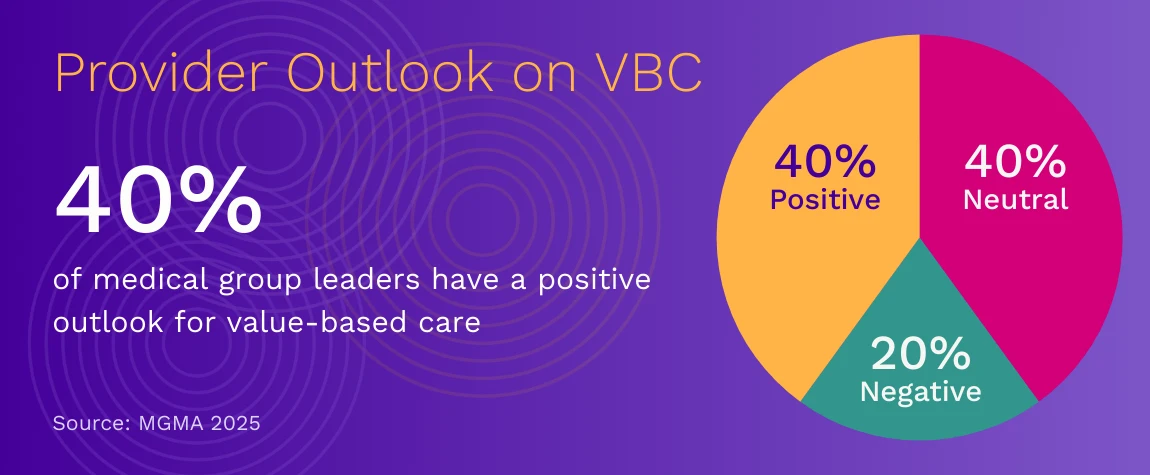
Healthcare organizations can take control of their value-based care outcomes before results are finalized, not after. As 2025 value-based care performance comes into focus, many provider leaders are reassessing how results compared to expectations. While some organizations achieved strong shared savings and quality outcomes, others faced financial pressure, operational strain, or unexplained variation across populations and contracts. What made these outcomes particularly frustrating was that they often came as a surprise, even for organizations that believed they were well prepared. The result was performance that did not fully reflect the effort invested in value-based care initiatives.

Unexpected value-based care performance is increasingly common as organizations take on more risk and expand across multiple value-based payment models. These outcomes highlight how closely value-based success depends on operational execution, data-driven decision-making, and care delivery alignment. The organizations that improve fastest use performance surprises as a catalyst to invest in data analytics and interdisciplinary structures needed for value-based care success.
Building on our Succeeding in Value-Based Care series, this article outlines practical considerations and concrete steps VBC decision-makers can take to improve results in 2026.
What Drove Unexpected 2025 Value-Based Care Results?
When results don’t line up with forecasts, it rarely comes down to a single issue. Instead, organizations find that a familiar set of challenges surface in new and more visible ways as value-based care programs scale. These patterns can appear across data, operations, contracts, and workforce adoption.
- Data and analytics limitations remain a significant challenge. As VBC participation steadily grows, many organizations lack timely access to actionable cost, utilization, and quality insights. Delayed claims, inconsistent attribution, and fragmented data sources reduce visibility into performance drivers during the year.
- Care operations complexity also plays a central role. While many providers have invested in care coordination and population health strategies, execution varies across service lines, sites, and teams. Inconsistent workflows and limited standardization create performance variation that can be difficult to manage at scale.
- Risk contract dynamics further influence results. Shifts in utilization, benchmark recalculations, and changes in patient behavior affect financial outcomes in ways that were not always anticipated during contract modeling.
- Workforce adoption challenges compound these issues. Competing clinical priorities, staffing shortages, and workflow burden slow adoption of new tools and care processes designed to support value-based performance.
Together, these factors underscore the importance of operational readiness as a core capability for value-based care success.
Practical Steps To Strengthen Value-Based Care Performance
1. Improve Performance Visibility Through Integrated Data
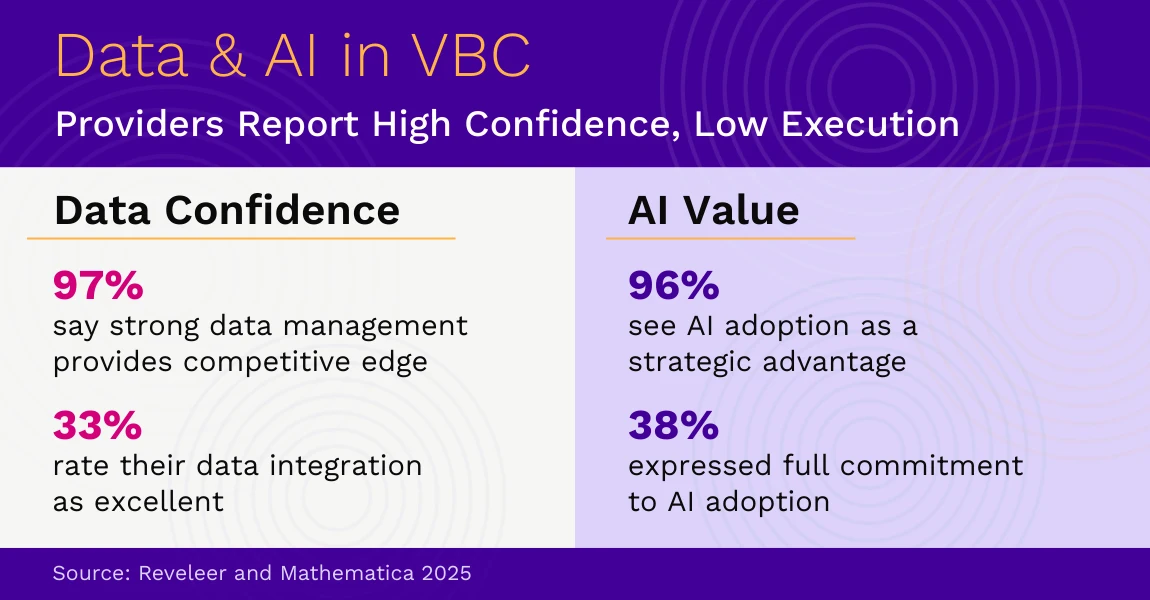
Strong value-based care operations depend on integrated clinical, financial, and claims data that support ongoing performance management. Leaders need insight into attribution, utilization trends, care gaps, and cost drivers throughout the performance year.
Action step: Establish enterprise data governance and analytics workflows that align finance, care operations, and clinical leadership around shared performance metrics and dashboards.
2. Standardize and Scale Care Models
Organizations that achieved consistent results in 2025 focused on operationalizing care models beyond pilot programs. Standardized workflows, clearly defined roles, and measurable outcomes supported reliable execution across populations.
Action step: Translate care models into repeatable operational playbooks that embed risk-adjusted pathways into daily clinical and care management workflows.
3. Connect Care Delivery Decisions to Contract Incentives
Value-based contracts reward specific behaviors, workflows, and outcomes. Without ongoing alignment between care delivery and contract requirements, organizations may fall short of expected reimbursement despite significant effort.
Action step: Regularly assess how current care workflows and utilization patterns are performing against contract criteria to course-correct and maximize value-based revenue.
4. Enable Care Teams With Practical Tools and Processes
Operational success in value-based care depends on adoption at the front line. Care teams benefit from tools that support decision-making, reduce administrative burden, and align daily work with performance goals.
Action step: Engage clinicians, care coordinators, and operational leaders in solution design to ensure tools and workflows support care delivery rather than disrupt it.
5. Establish Continuous Performance Improvement Cycles
Organizations that treat value-based care as an ongoing operational discipline tend to improve faster over time. Regular performance reviews help teams understand drivers of variation and refine care operations throughout the year.
Action step: Implement recurring performance review cycles that connect analytics insights to operational adjustments and care model refinements.
Implications for 2026 Value-Based Care Planning
As organizations plan for 2026, the focus is shifting toward strengthening care operations as a foundation for financial and quality performance. This includes investing in analytics infrastructure, refining care delivery workflows, and improving coordination across clinical and operational teams.
Organizations that align strategy, care operations, and performance management are better positioned to manage risk, improve patient outcomes, and sustain results across value-based payment models.
How Tegria Supports Value-Based Care Operations
Tegria partners with provider organizations to operationalize value-based care strategies through the implementation of supporting technical functionality and the introduction and adoption of integrated care models. By aligning data, processes, and people, Tegria supports sustainable improvement in value-based care performance.